Lord Hanuman, the eternal symbol of devotion, strength, and humility, is revered across Hindu traditions. His multifaceted nature is reflected in various forms he assumes to protect the righteous and destroy evil.
In this article, we explore five of his most powerful manifestations, each embodying unique divine attributes.
1. Panchmukhi Hanuman (The Five-Faced Hanuman)
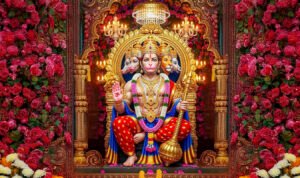
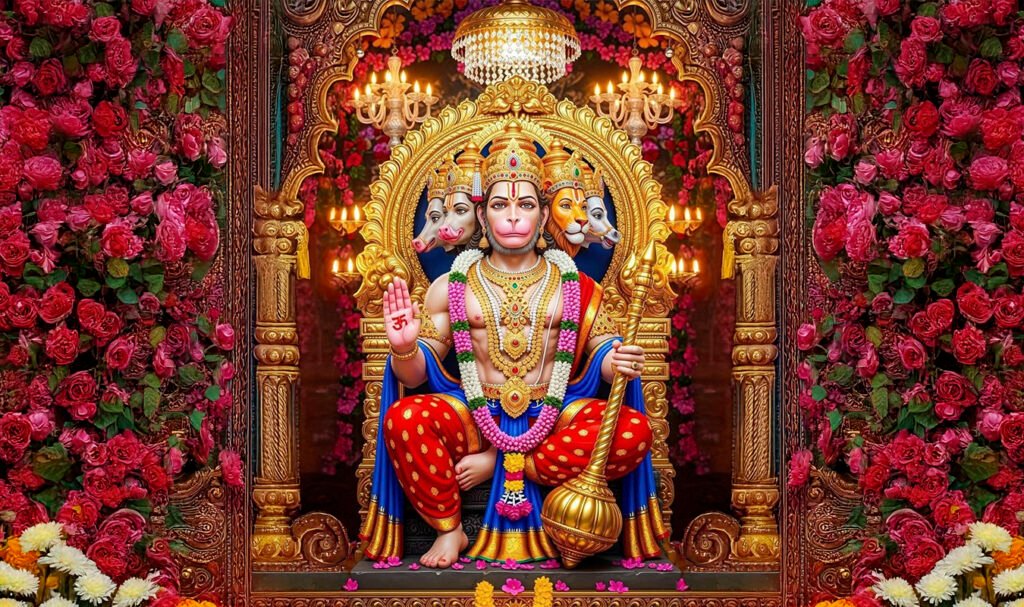
Panchmukhi Hanuman is a unique form where Lord Hanuman manifests five faces, each symbolizing a different deity and representing various aspects of his divine powers.
This form is believed to have emerged during the battle with Ravana to counter the powerful demon Ahiravana.
Sanskrit Verse:
“पञ्चमुखं शिरोभिर्युक्तं सर्वरोग निवारिणम्।
सर्वसिद्धि प्रदं देवं पञ्चमुखं नमाम्यहम्॥”
सर्वसिद्धि प्रदं देवं पञ्चमुखं नमाम्यहम्॥”
Translation:
“I bow to the five-faced Lord Hanuman, who is endowed with five heads, dispels all ailments, and bestows all accomplishments.”
Explanation:
“1. Hanuman Face (East): Symbolizes strength and courage.”
“2. Narasimha Face (South): Represents protection and the destruction of evil.”
“3. Varaha Face (West): Embodies the earth and its preservation.”
“4. Garuda Face (North): Signifies speed and the ability to traverse great distances.”
“5. Lion Face (Upward): Symbolizes the divine presence and spiritual upliftment.”
Significance:
Worshiping Panchmukhi Hanuman is believed to provide protection from all directions, remove obstacles, and grant spiritual and material benefits.
2. Veer Hanuman (The Mighty Warrior Hanuman)
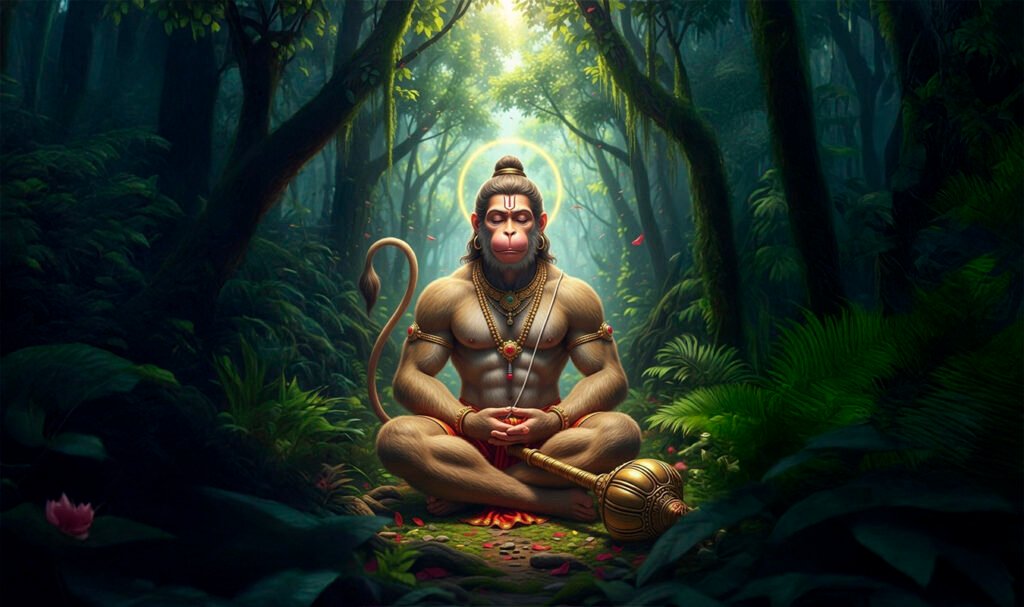
Veer Hanuman represents the valor and indomitable spirit of Lord Hanuman. This form is often depicted during the battle scenes in the Ramayana, showcasing his immense strength and courage.
Sanskrit Verse:
“वीरं वीरं महावीरं रामदूतं महाबलम्।
राक्षसान्तकं देवं हनुमन्तं नमाम्यहम्॥”
राक्षसान्तकं देवं हनुमन्तं नमाम्यहम्॥”
Translation:
“I bow to the brave, mighty, and powerful Hanuman, the messenger of Lord Rama, who is the destroyer of demons.”
Explanation:
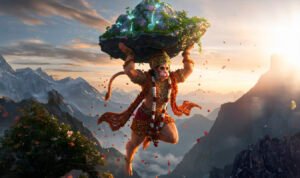
In this form, Hanuman is depicted as a fierce warrior, wielding weapons and displaying unmatched strength. His valor is exemplified in various episodes, such as lifting the Dronagiri mountain to deliver life-saving herbs to Lakshmana.
Significance:
Devotees believe that invoking Veer Hanuman instills courage, determination, and the strength to overcome challenges.
3. Sankat Mochan Hanuman (The Remover of Troubles)
Sankat Mochan Hanuman is revered as the remover of obstacles and troubles. The term ‘Sankat Mochan’ translates to ‘the one who frees from distress.’
Sanskrit Verse:
“संकट मोचनं देवं सर्वरोग निवारिणम्।
सर्वसिद्धि प्रदं देवं हनुमन्तं नमाम्यहम्॥”
सर्वसिद्धि प्रदं देवं हनुमन्तं नमाम्यहम्॥”
Translation:
“I bow to the Lord who removes all troubles,
dispels all ailments, and bestows all accomplishments.”
dispels all ailments, and bestows all accomplishments.”
Explanation:
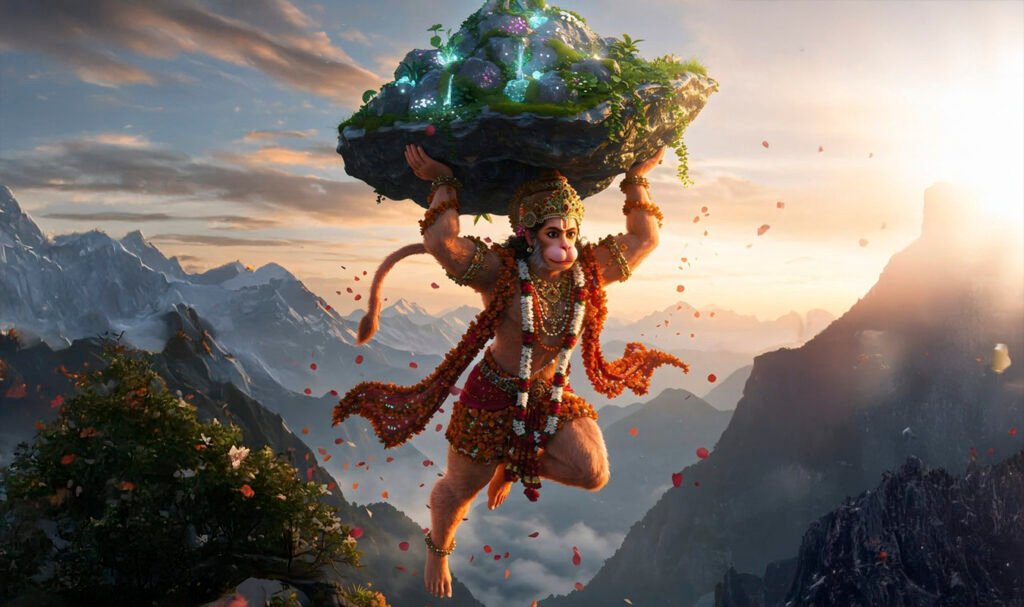
This form emphasizes Hanuman’s role as a compassionate deity who alleviates the sufferings of his devotees. The Sankat Mochan Hanuman temple in Varanasi is a significant pilgrimage site for those seeking relief from hardships.
Significance:
Chanting the Sankat Mochan Hanuman Ashtakshara mantra is believed to bring peace, remove obstacles, and grant blessings.
4. Rudra Avatar Hanuman (The Fierce Form of Hanuman)
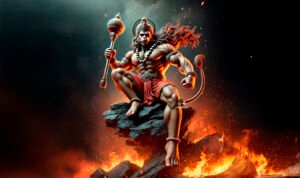
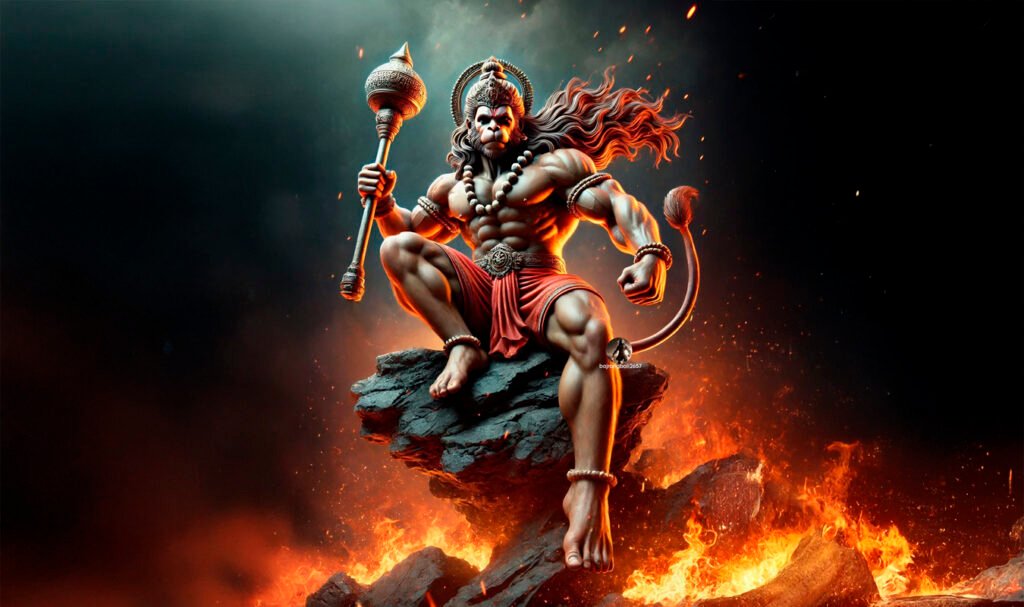
Rudra Avatar Hanuman is considered the eleventh Rudra form of Lord Shiva. This manifestation showcases Hanuman’s fierce aspect, where he embodies the destructive power of Rudra to annihilate evil forces.
Sanskrit Verse:
“रुद्रं रुद्रं महारुद्रं सर्वरोग निवारिणम्।
सर्वसिद्धि प्रदं देवं हनुमन्तं नमाम्यहम्॥”
सर्वसिद्धि प्रदं देवं हनुमन्तं नमाम्यहम्॥”
Translation:
“I bow to the Rudra form of Hanuman, the great Rudra, who removes all ailments and bestows all accomplishments.”
Explanation:
In this form, Hanuman is depicted with a terrifying appearance, symbolizing the destructive aspect of the divine. His Rudra form is invoked to eliminate powerful adversaries and restore cosmic balance.
Significance:
Worshiping Rudra Avatar Hanuman is believed to grant protection from negative energies and empower devotees to face formidable challenges.
5. Bhakta Hanuman (The Devoted Servant of Lord Rama)
Bhakta Hanuman represents the epitome of devotion and service. This form highlights Hanuman’s unwavering loyalty and dedication to Lord Rama.
Sanskrit Verse:
“राम दूतं महाबलं राक्षसान्तकं दैत्यनाशनम्।
भक्तवत्सलं देवं हनुमन्तं नमाम्यहम्॥”
भक्तवत्सलं देवं हनुमन्तं नमाम्यहम्॥”
Translation:
“I bow to Hanuman, the messenger of Lord Rama, the mighty one, the destroyer of demons, and the beloved of devotees.”
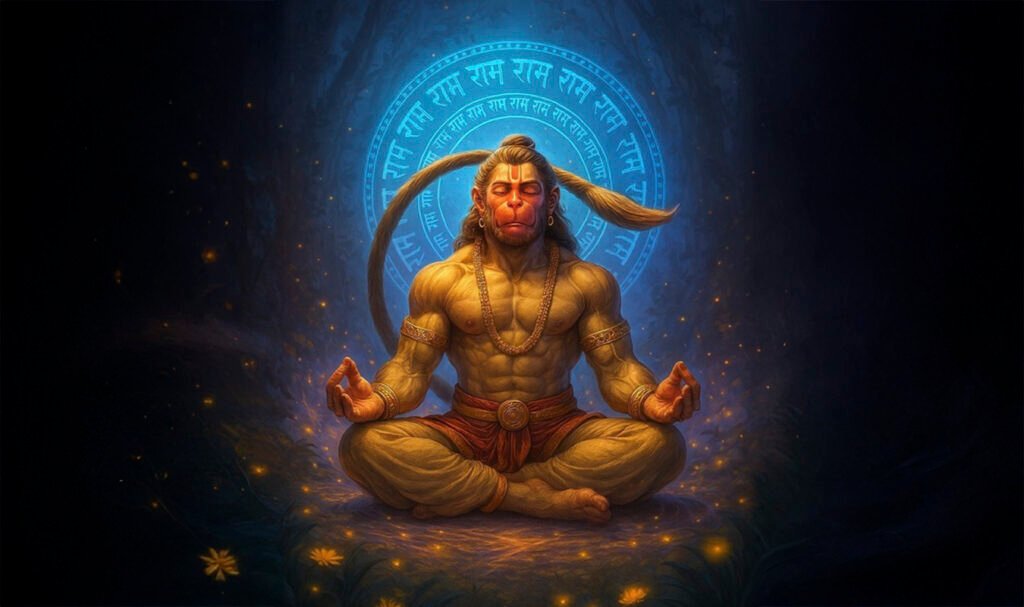
Explanation:
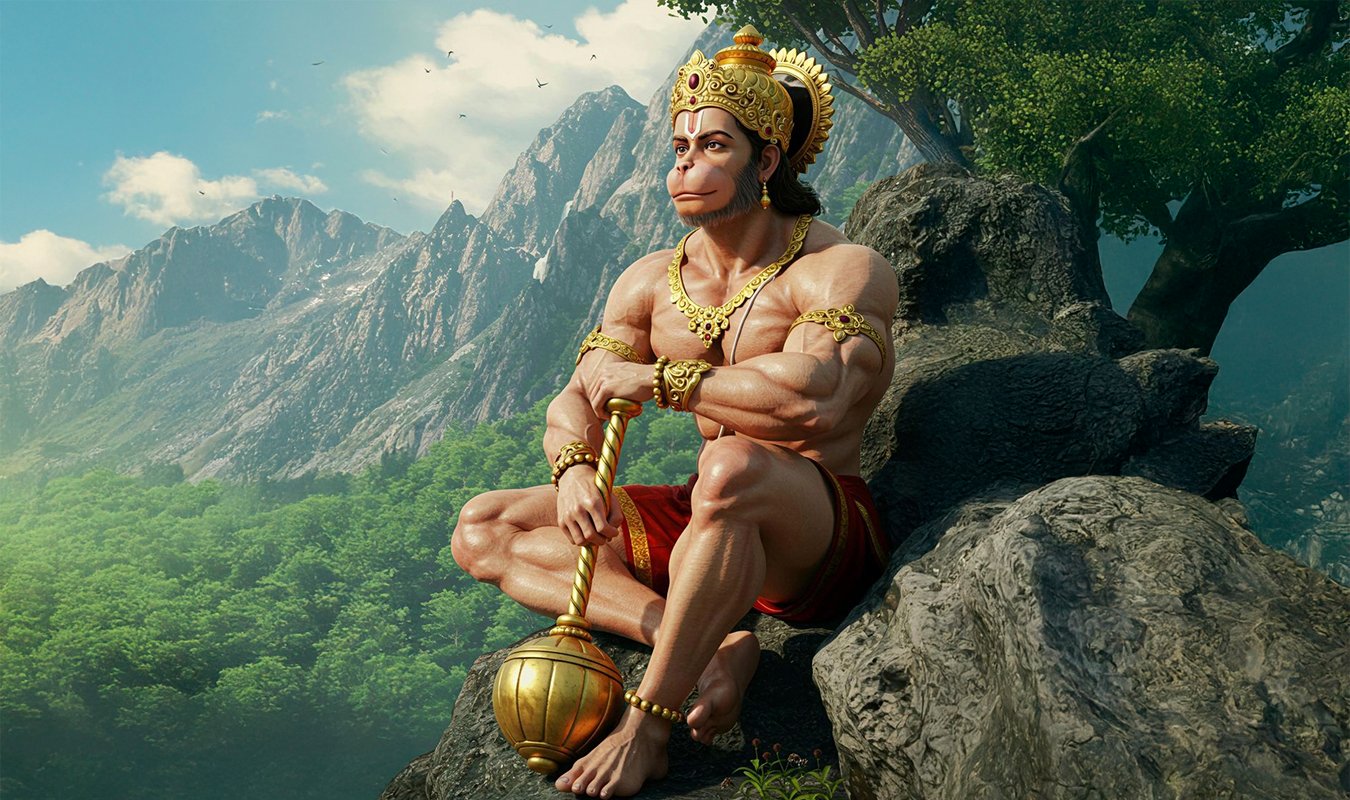
Bhakta Hanuman is often depicted in a meditative posture, symbolizing his deep devotion and surrender to Lord Rama. His life and actions serve as a model for devotees to emulate in their spiritual journey.
Significance:
Chanting the Hanuman Chalisa and other prayers dedicated to Bhakta Hanuman is believed to cultivate devotion, humility, and spiritual growth.
Conclusion
Lord Hanuman’s five strongest forms exemplify his multifaceted nature and his unwavering commitment to dharma. Each form offers unique blessings and serves as a beacon of hope and strength for devotees. By understanding and venerating these forms, one can draw closer to the divine and seek guidance in overcoming life’s challenges.