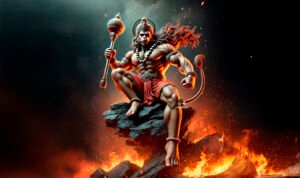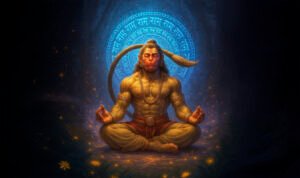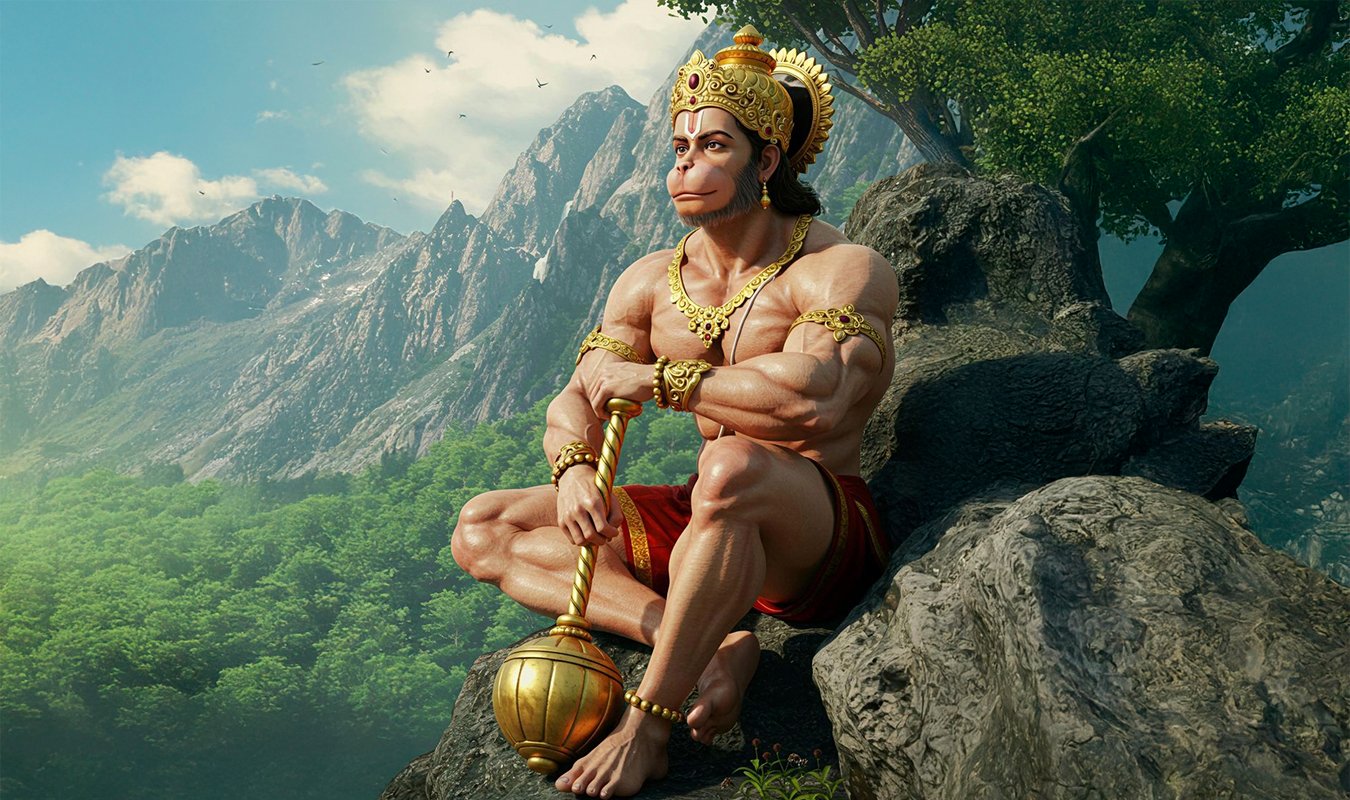
Among all the divine forms of Lord Hanuman, one shines brightest in the hearts of devotees — Sankat Mochan Hanuman, the remover of all sorrows and obstacles.
He is the guardian of faith, the shield of the helpless, and the one who hears the cries of the suffering faster than any other deity.
Wherever there is despair, wherever dharma seems to falter, there comes the soft yet powerful presence of Sankat Mochan — the compassionate warrior who lifts burdens and restores light in the hearts of those who call upon him.
Even today, devotees across India chant:
“Sankat Mochan naam tiharo, sunat hove dukha dura.”
“Your very name, O Hanuman, drives away sorrow.”
“Your very name, O Hanuman, drives away sorrow.”
Sankat Mochan Hanuman — The Remover of Obstacles
The Merciful Protector Who Uplifts All Suffering Souls
“Sankat te Hanuman chhudave, man kram vachan dhyan jo lave.”
“Hanuman frees all who remember Him in thought, word, and deed from every distress.”
— Hanuman Chalisa
“Hanuman frees all who remember Him in thought, word, and deed from every distress.”
— Hanuman Chalisa
The Legend of Sankat Mochan Hanuman
Long after the great war of Lanka ended and peace was restored, Lord Rama returned to Ayodhya and was crowned king. But even in that time of joy, Rama often noticed something remarkable — whenever any trouble arose in the kingdom, Hanuman would already be there before anyone called for help.
The Village of Tears
One such tale is told in the Ananda Ramayana.
In a distant village, a plague had struck. Crops failed, people were sick, and prayers went unanswered. The villagers gathered before the temple of Rama and cried, “O Lord, why have you turned away from us?”
At that very moment, a soft wind passed through the trees, carrying with it the scent of sandalwood and strength.
A radiant figure appeared — humble yet glowing like dawn — it was Hanuman.
He walked among the villagers, blessed their food, and whispered Rama’s name into their ears.
“Fear not,” he said gently. “No one who remembers Rama is ever abandoned.”
That night, the rains came. The crops revived. The sick were healed.
And when the villagers awoke the next morning, Hanuman had vanished.
But on the temple door, written in sacred ash, were the words:
“Sankat Mochan” — the remover of distress.
Since then, Hanuman has been worshipped in this merciful form — Sankat Mochan Hanuman, who listens to every sincere prayer and responds instantly with divine grace.
Sanskrit Verse
“संकटमोचन नाम तिहारो, जो सुमिरे सो सुख पावे।
दीन दुखी अरु संकटमय, तिनके संकट मिटावे॥”
दीन दुखी अरु संकटमय, तिनके संकट मिटावे॥”
Sankat Mochan nām tihāro, jo sumire so sukh pāve,
Dīn dukhī aru saṅkaṭamay, tinke saṅkaṭ miṭāve.
Dīn dukhī aru saṅkaṭamay, tinke saṅkaṭ miṭāve.
Meaning:
“Your name itself, O Hanuman, brings peace and joy.
Those who are poor, sad, or troubled — you free them from their pain.”
The Divine Compassion of Hanuman
Unlike many fierce deities who destroy evil with power, Sankat Mochan Hanuman destroys the root of suffering — ignorance and fear.
He teaches us that no obstacle is bigger than faith, and no sorrow lasts when devotion awakens within the heart.
He appears wherever people cry in pain — not as a god demanding offerings, but as a friend, healer, and protector.
When the mind trembles, when fear grips the heart, or when obstacles seem endless — repeating his name brings an unexplainable calm, as though a warm divine hand rests upon one’s shoulder.
The Spiritual Meaning of “Sankat”
The word Sankat means hardship, distress, or bondage.
Mochan means release or liberation.
Mochan means release or liberation.
Thus, Sankat Mochan Hanuman is not just a remover of outer troubles — he removes the inner knots of doubt, fear, and sorrow that hold the soul captive.
He grants mental clarity, spiritual courage, and peace in the storm.
“When devotion deepens, obstacles turn into opportunities — this is the blessing of Sankat Mochan Hanuman.”
Hanuman’s Divine Intervention in Ramayana
One of the most touching moments of this form comes during the battle with Indrajit, Ravana’s powerful son.
When Lakshmana was struck by the deadly Shakti Astra, everyone feared he would die.
Hanuman did not wait for orders.
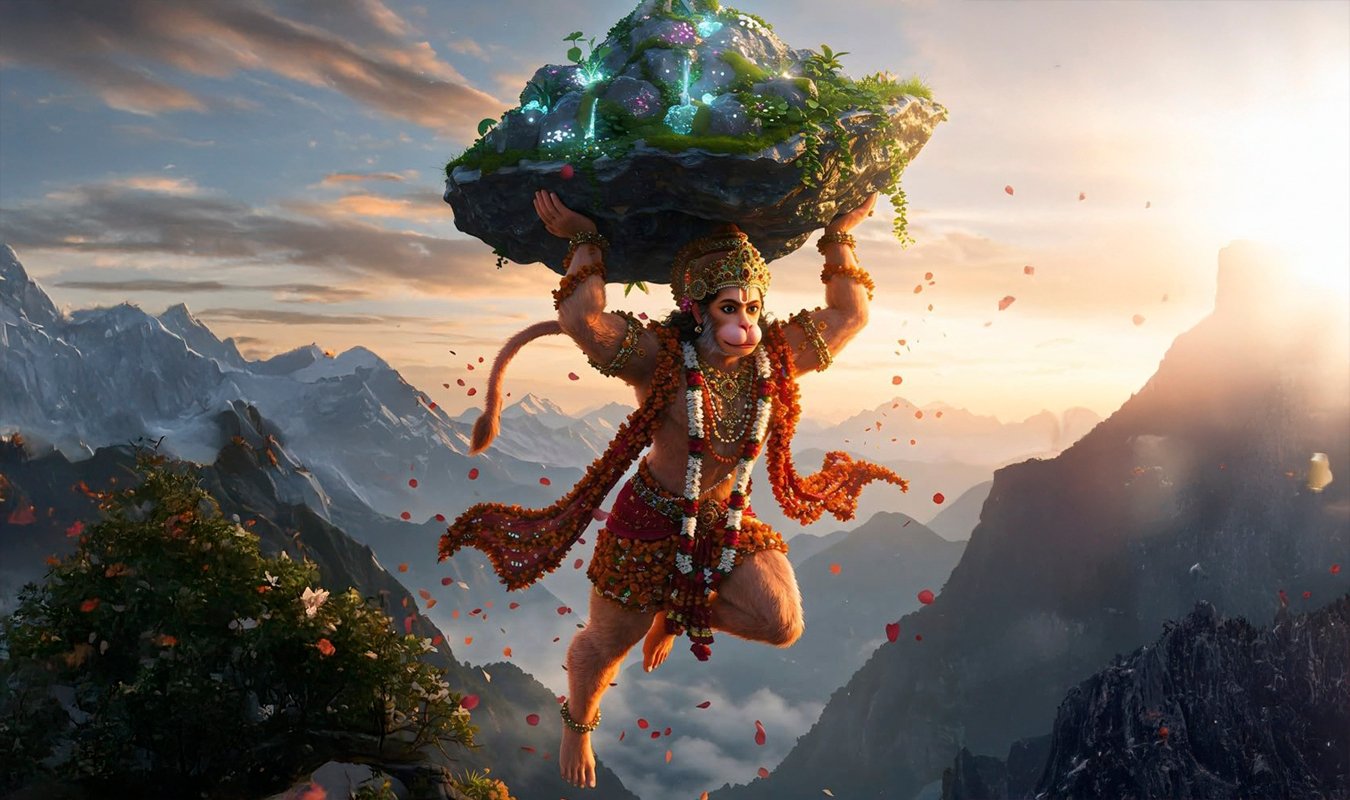
He leapt into the skies toward the Himalayas, determined to bring back the Sanjeevani herb that could revive him.
Mountains trembled as he searched. When he could not find the exact herb, he lifted the entire Dronagiri mountain and carried it back to Lanka.
That night, as Lakshmana opened his eyes, even Rama wept — not just from relief, but from witnessing the pure love that moves the universe itself.
Thus, Hanuman became forever known as the Sankat Mochan — the one who never lets sorrow win.
The Mantra of Peace and Protection
“ॐ हनुमते नमः।
ॐ श्री संकटनाशनाय नमः।“
ॐ श्री संकटनाशनाय नमः।“
(Om Hanumate Namah.
Om Shri Sankatnashanaya Namah.)
Chanting this mantra daily, especially on Tuesdays or Saturdays, creates a protective aura that repels negativity and invites divine guidance.
Worship and Rituals
To connect with Sankat Mochan Hanuman:
1. Light a sesame oil lamp at dawn or dusk.
2. Offer boondi ladoos or chana-jaggery.
3. Recite the Hanuman Chalisa slowly, feeling each word.
4. Sit silently for a few moments after chanting, imagining Hanuman’s presence removing your inner burdens.
In Varanasi’s Sankat Mochan Temple — one of the holiest in India — it is believed that even a single visit can dissolve the heaviness of the heart.
Devotees who walk in with tears often walk out smiling, lighter than they arrived.
A Story from Varanasi
It is said that the great saint Tulsidas, who wrote the Hanuman Chalisa, once faced great opposition while composing the Ramcharitmanas. He prayed for guidance — and that night, a divine figure appeared, glowing like sunrise, his presence filling the room with fragrance.
It was Hanuman
He spoke gently, “Fear not, Tulsidas. Rama’s words flow through your hand. Continue your work.”
When Tulsidas looked again, the figure had disappeared — but on his writing table lay a single red flower, untouched by the wind.
That very spot later became the sacred Sankat Mochan Temple in Varanasi.
To this day, devotees say that if you whisper your sorrow there, Hanuman himself listens — silently, lovingly, swiftly.
The Inner Teaching
Sankat Mochan Hanuman is not far away.
He lives within the heart — in every breath that carries faith, in every tear shed in surrender, and in every act of courage done in God’s name.
He teaches:
“Do not fear life’s storms. I am the wind that guides you safely through them.”
When one remembers Hanuman with love, even destiny bends in compassion.
Closing Verse
“भूत पिशाच निकट नहिं आवै,
महावीर जब नाम सुनावै।”
महावीर जब नाम सुनावै।”
Bhūt pishāch nikat nahi āvai,
Mahāvīr jab nām sunāvai.
Meaning:
“No evil or sorrow can come near the one who chants the name of Mahaveer (Hanuman).”
Final Reflection
In every age, Hanuman returns — not as a warrior with weapons, but as a friend who frees hearts from fear.
His strength is love.
His weapon is faith.
His promise — no devotee shall ever be left alone in distress.
“To remember Sankat Mochan Hanuman is to remember hope itself.”